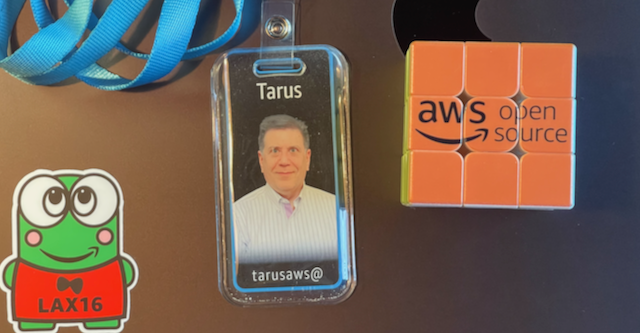
Today marks four years since I joined AWS. My last day will be Friday.
I have to say being fired from AWS is actually a relief. There have been a lot of changes to the company since I joined in 2022, and the company I wanted to work for is no longer the same company.
This past year, while I was doing my best to make AWS play nice in open source communities, there were two main drivers making me unhappy with my job: organizational change and the acceleration of the focus on Generative AI.
The organizational change came in the form of the man who hired me, David Nalley. I was skeptical about joining AWS, especially since I work in open source, but David convinced me that his team, OSSM (Open Source Strategy and Marketing), was dedicated to making AWS a better citizen in open source communities.
Amazon has a really odd viewpoint when it comes to the people who work there. They view almost all employees as “fungible”.
Now the first time I had ever heard the term “fungible” was in reference to non-fungible tokens (NFTs), but it basically means “replaceable”. Amazon built a huge retail business on processes that could take someone who was relatively healthy and relatively intelligent, and turn them in to a productive fulfillment center employee in a couple of weeks. While that may work for a shipping business, it doesn’t translate all that well to information technology, since so much of being successful in that business relies on institutional knowledge that must be earned over time.
It also assumes that there is a limitless supply of people with the required skills, and a willingness to work for Amazon.
In any case, during the interview process David called me “non-fungible” (which still sounds dirty in my mind but did make me proud) and I got the job.
While my official role was to act as a liaison between AWS and customers who were commercial open source companies, I simplified that to mean bring a human face to a huge, faceless corporation.
David was a very good manager. In fact, he is in the running to be the best manager I’ve ever had, although that title still belongs to a man named Jay Clapsadle (who is long since retired). He has an innate understanding of how AWS works, and he would always nudge me into those situations where my unique but limited talents would be put to good use.
Well, last year David, being very good at his job, got promoted to run the entire AWS Developer Experience organization. OSSM is a part of it, but I no longer interacted with him in a meaningful way. My “David Time” went almost to zero.
Also, last year the focus at AWS turned fully and almost desperately toward GenAI.
This post is already too long so I won’t pull out all of the examples I was going to bring up at this point in the narrative, but we started being driven to use as much AI as possible. People were writing things like “I use AI to summarize my email!”. I mentally responded to that with “why don’t we just write better emails?”. And one that really bothered me was “I used one prompt to create my conference presentation!”
In the modern economy, the most valuable commodity is attention. I really appreciate the attention my three readers give to my posts, even when I lose them halfway through. I love giving conference talks and I spend a considerable amount of time creating them, and when someone still wants to speak but doesn’t want to put in the work, it makes me angry. Seriously, why do it?
It has gotten better, but I used to see AI generated images with lots of unintelligible writing or misspelled words in slides, but the speaker left them in anyway. “Good enough” is not customer obsession.
In this whole pivot to GenAI, AWS has lost its focus on the customer. Instead of working backwards from a genuine customer need, the goal seems to be to create as many things as fast as possible, throw them into the world and see which ones gain traction, whether or not they serve a real need.
There is this push to use AI to create content which will ultimately be consumed by AI, and we’ve lost the human being in the process.
When AWS first introduced a viable cloud to the world, it was amazing. Back in the 1990s when you wanted to implement an enterprise software solution, you first had to take a guess at what computing power you would need. Next, you would have to order hardware from companies like Sun Microsystems or Dell and that could take weeks if not months to be delivered. It would then need to be racked, powered and provisioned, and then you were screwed if you happened to undersize it or criticized if you spent too much and oversized it.
The cloud solved those problems, and AWS set the standard with services such as S3, EC2, RDS, etc.
Go to re:Invent these days and try to find a session on those tools. Even when you can, AI will still dominate the presentation.
This whole thing made me question my role. My personal goal is to make AWS the default choice for running open source workloads, but what does that mean when you can simply “vibe code” the same functionality, bypassing the license?
The customer focus at AWS has also changed. Instead of appealing to those people focused on the infrastructure required to build stable and feature-rich applications, it has become abstracted to focus on a level above that, since the whole promise of GenAI is to make those people no longer necessary; to make those people “fungible”.
Last year the achievement I am most proud of involved getting a suspended AWS account reinstated. The financial impact to the company was negligible as this customer wasn’t a huge spender, but they are one of those people that made AWS successful in the first place.
A man in northern Africa posted that his decade-old AWS environment had been shut down with little notice and no recourse. In fact, he was told that his data had been deleted.
I reached out to him to see if I could help, but I wasn’t optimistic. If his data was gone, it was gone, but I really wanted to capture as much as I could about the experience in order to prevent others from having to go through it.
In the process of turning this person from an account number into a human being, I learned more about his situation and, while I won’t share details, losing his AWS account was just one of a long list of issues he was dealing with at the time.
Long story short, I was able to get his resources restored. All I did was manage to poke the right bear and the support team did the rest of the work (and they were amazing). He wrote up a nice post that mentioned me, but the main point of it was that this issue shouldn’t have happened in the first place.
No one in senior management seem to care once the case was closed, but that attitude was not the norm, especially among the rank and file. When that post hit, I had a number of random Amazonians ping me on Slack to thank me, some even going so far as to say I renewed their faith in the company. It was rough in that no one in leadership seemed to care that I did this.
This past year has been rough in other ways. Last October there was a mass layoff but it didn’t impact many people with whom I worked closely. The January mass layoff was much worse, and several friends I’d made at AWS were now looking for work. The stress impacted my health. I’ve gained yet another ten pounds (bringing my four year total to nearly thirty), I consistently set new high scores on the blood pressure machine, and my sleep is so disrupted I haven’t had a single good night’s sleep in weeks (I wrote most of this in a hotel room at [checks watch] 1am).
I cannot stress enough that AWS employs some amazing people, but between the reduction in force and people leaving for better companies, I’m not sure how long that can be sustained. Many good people have left on their own and others, like myself, have been told to leave.
Then there are a number of things that made me embarrassed to work at Amazon. Cory Doctorow did a long post on how Amazon creates “reverse centaurs”. No Amazonians I worked with could read that and not feel at least a little ashamed.
One thing AWS gets right is that it allows a Slack channel called #actual-aws-memes to exist. While it is heavily moderated, it is a place for people to blow of steam by posting memes about life at AWS. I posted my first (and obviously last) one this past week.
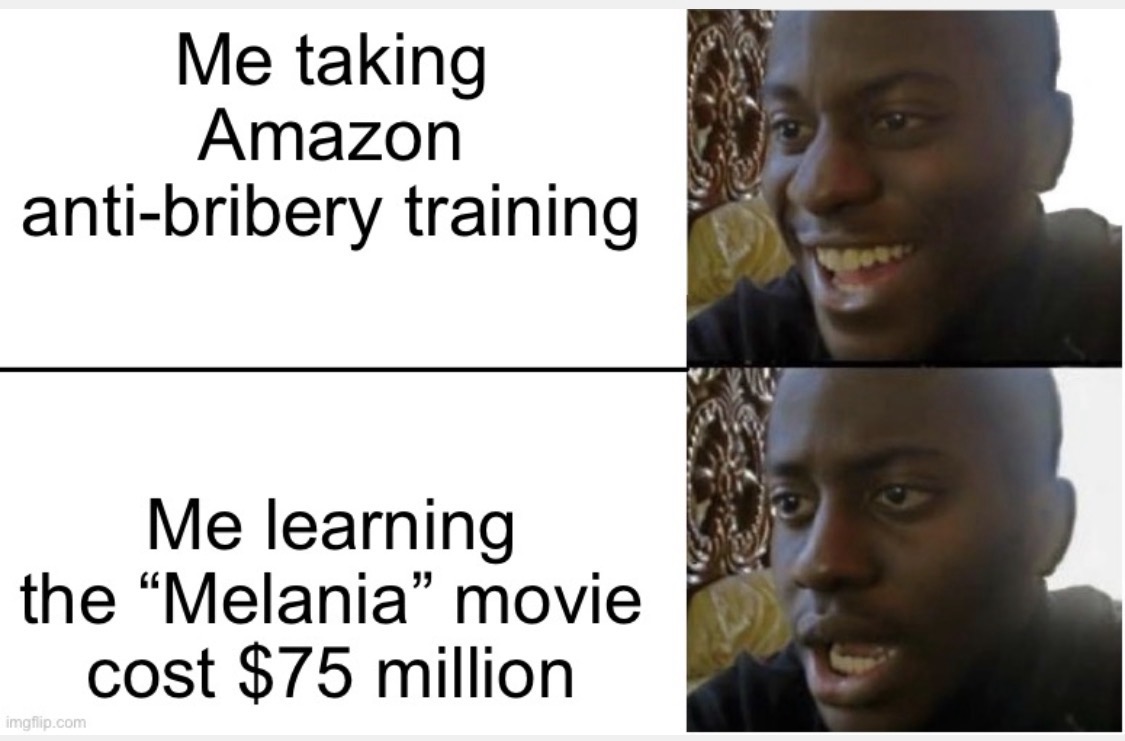
Note that I don’t think that meme was why I got fired, and I want to stress that in my four years at AWS I was never asked to do anything I felt was unethical, much less illegal. But there seems to be a level in this country, and the world in general, where following the law becomes optional.
I didn’t know what my future was at AWS, so being forced to leave is actually a relief. After attending GrafanaCon this year, I really want to get back to my open source roots.
Open source has always been, at least to me, about putting technological power and control into the hands of the user and not the vendor. How will that play out in GenAI, when every state of the art model can only be accessed by API? Even if you want to try to run models locally, who can afford the hardware?
And what do you do when your job is to be a human being in a world of AI?