Hazel Weakly starts off her presentations with the words “I have thoughts, lots of thoughts”. That pretty much sums up my mental state after having attended this year’s Monki Gras conference.
Monki Gras is an annual conference organized by James Governor of Redmonk. Redmonk is an analyst firm in the tech space with a focus on developers and open source. In my previous life we became Redmonk clients, and it was definitely worth the spend.
Monki Gras is the sister conference to Monktoberfest, which is organized by the other Redmonk founder Stephen O’Grady. Monktoberfest started out as a joke on Twitter about having a tech conference that also focused on beer. The joke became reality and the first one was held in 2011.
What’s better than a conference that combines TED talks with beer? Two conferences! Monktoberfest in the autumn and Monki Gras six months later in the spring.
This year’s Monki Gras was my first. Open source wouldn’t exist without its community, and Monki Gras brings together some of the brightest minds in that domain.
I am not one of them.
Seriously, I consider myself a good public speaker but the least engaging talk at Monki Gras sets a bar to which I can only aspire.
The conference was held at the Tab Centre, which is next to the Tabernacle Church. While we use the term “Free and Open Source Software” there is a bit of a spectrum between those who prefer “free software” and those who use “open source”. The “free” side tends to include more of a social justice component, and the fact that all proceeds from the rental of the venue would go to a charity was just a bonus.
There are many things to like about the format of Monki Gras. It is a single track conference, which I like because it may expose me to topics I wouldn’t choose on my own. It spans two days, with Thursday being a full day of talks followed by a dinner, and Friday ending slightly earlier.
Thursday morning would mark the start of the conference as well as continuing a spate of amazing weather, especially for London. Monki Gras requires a negative COVID test for entry, and while at least one person wasn’t happy with that, I like it. I travel a lot and end up getting sick because of it, and as I write this I’m on day three of a self-imposed quarantine away from my family so that they don’t get sick. I went to another, much larger, conference right after Monki Gras where no tests were required, and while I hope I escaped without illness I don’t want to take the chance.
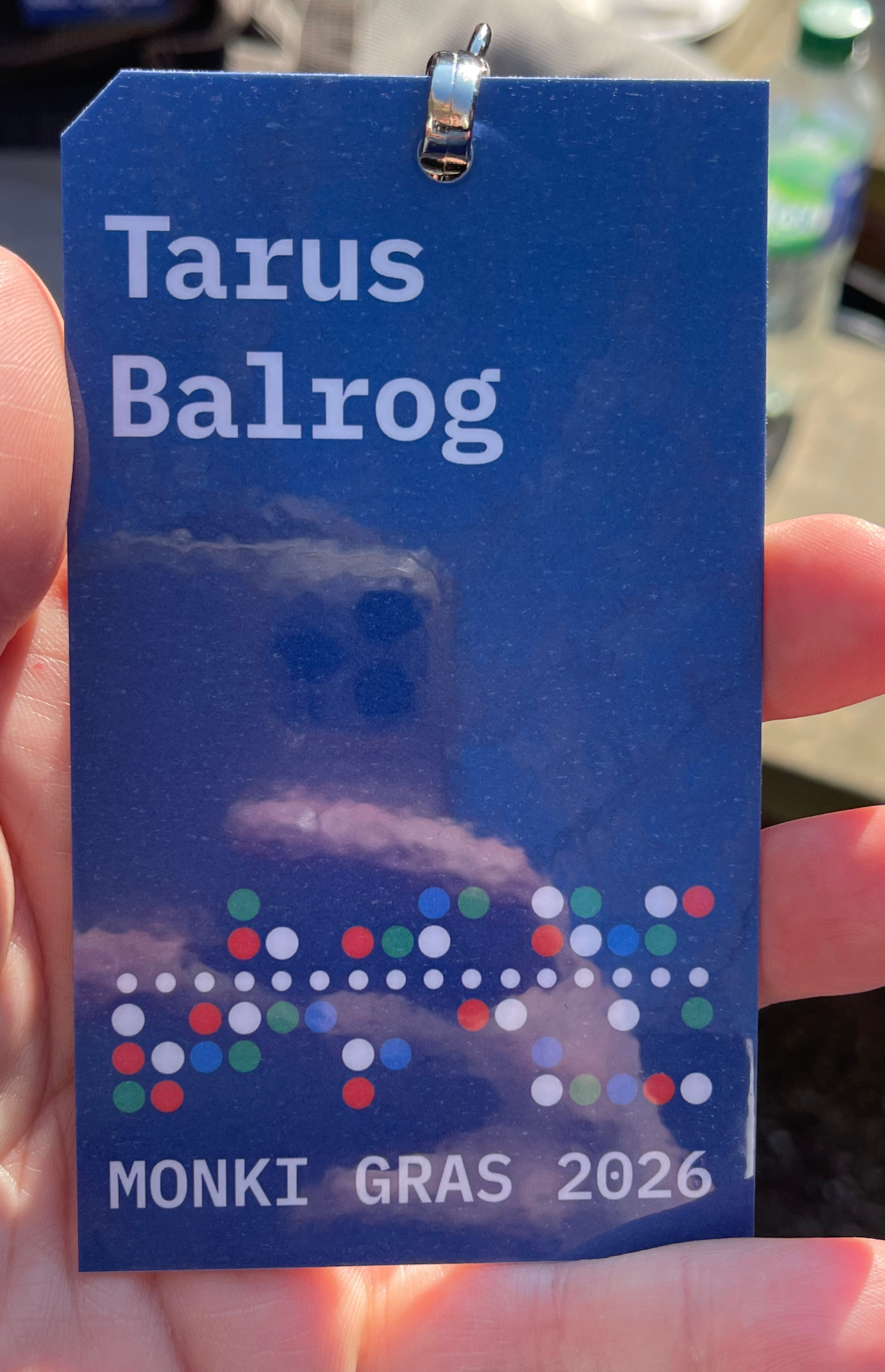
After I showed my negative test I got my badge. Couldn’t tell if James was just putting one over on me or if it was an honest autocorrect error.
Monki Gras is first and foremost about craft. Craft is defined as “skill in doing or making something”. I got my first computer in 1978, and while I have always looked at technical excellence as being part of craft, it seems that a number of people don’t look at it that way. Monki Gras celebrates it. This year’s conference theme was “Prepping Craft - Being Prepared in Software and in Life”.
I’m not going to go in-depth about all of the speakers and what they talked about, as I will get a lot of it wrong and you should just come to the conference, but I did want to give a taste with this summary of the event.
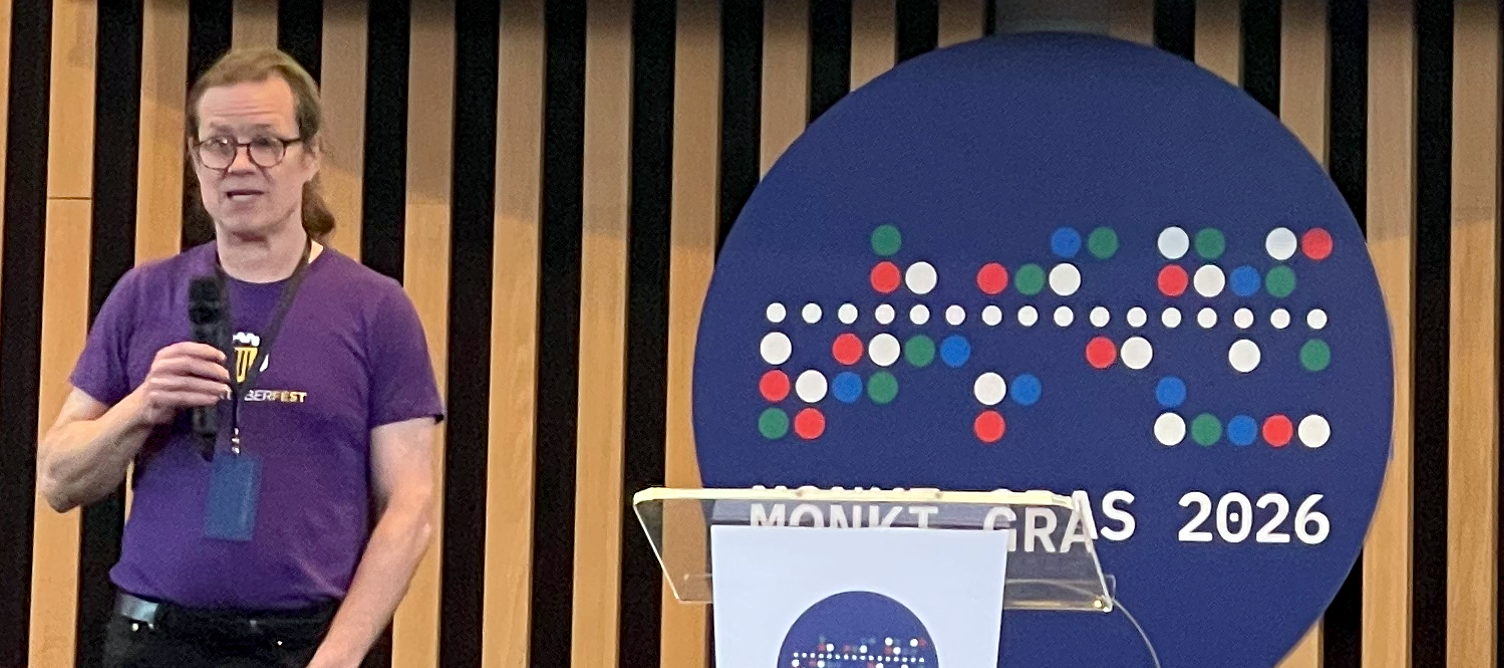
James was our master of ceremonies, and he was definitely in his element. Entertaining as always, he really set the tone for the conference as a whole, and made the speakers and the audience feel welcome.
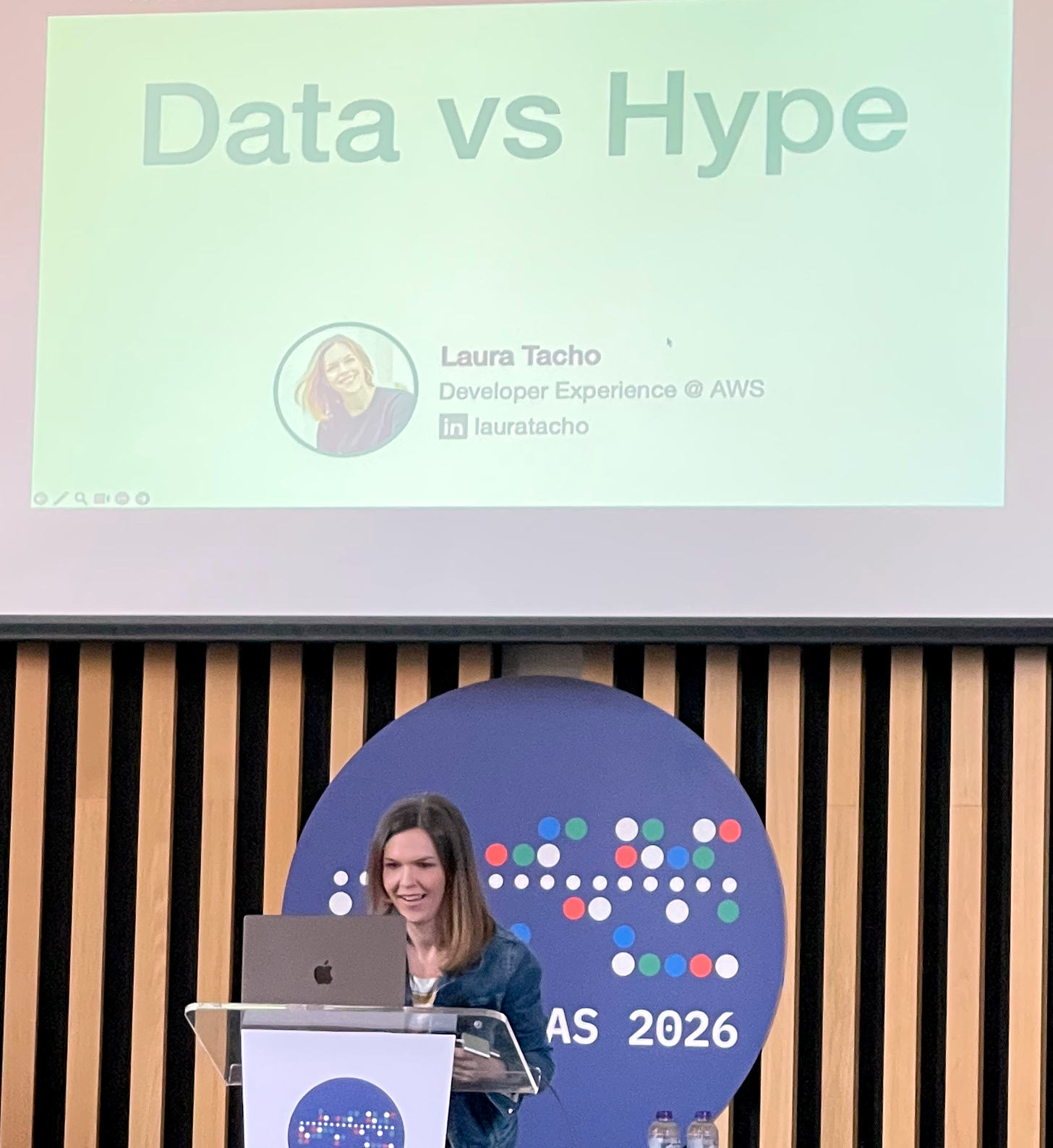
The first speaker was Laura Tacho (pronounced like “taco” and not “nacho”). Laura has just joined the DevRel team at AWS and what a great hire. The trip would have been worth it just to hang out with her for a bit.
Her talk concerned AI and focused on the data versus the hype. For example, we’ve heard of things like “AI makes me twice as productive” but the data shows that it makes most developers more like 10% more productive.
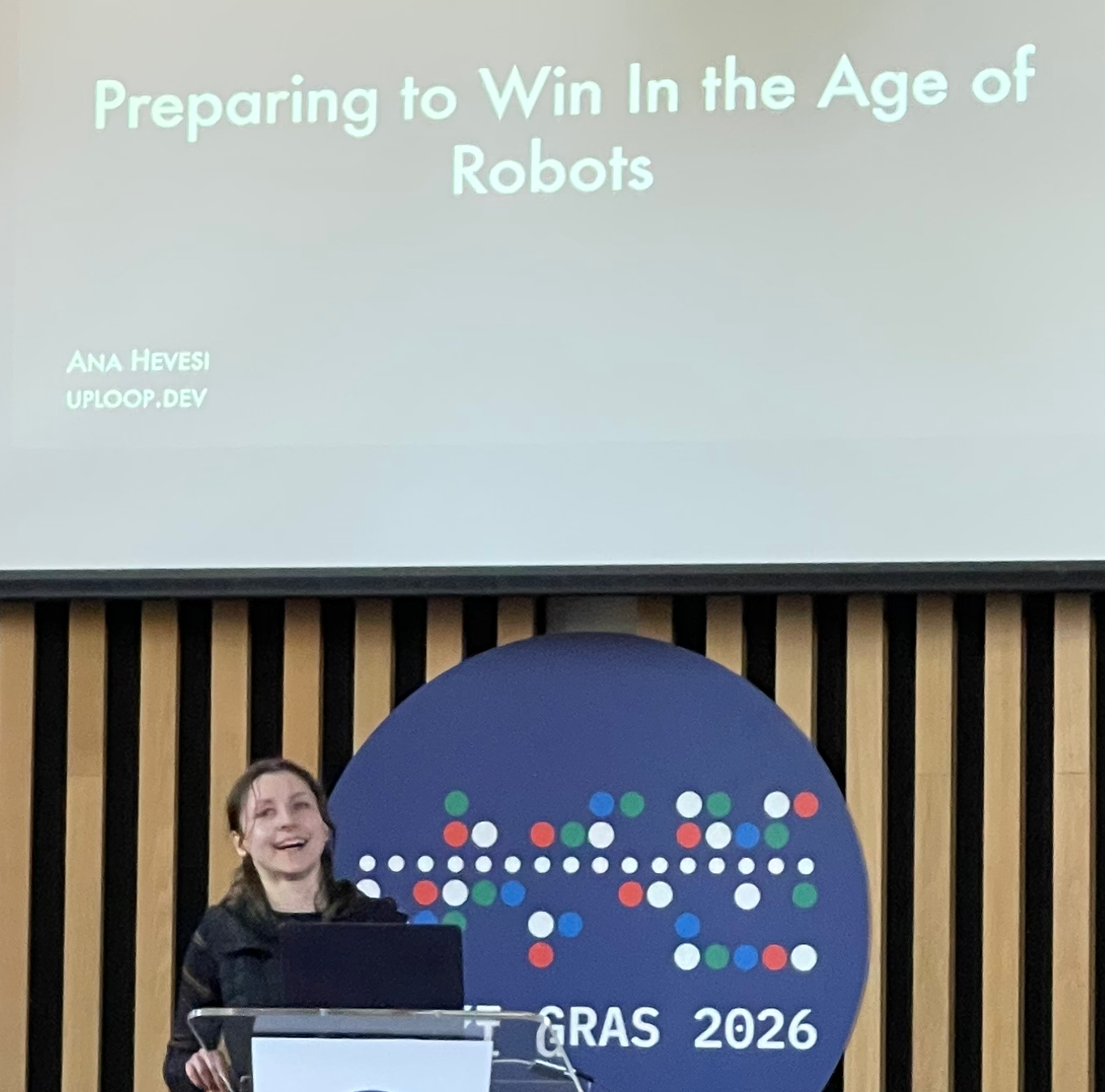
Ana Hevesi was the next speaker, and she also focused on being prepared in a world with AI. I got to talk with her briefly later in the conference and she confirmed something I suspected. The very professional way she gave her talk tagged her as a “drama nerd”, and it takes one to know one. (grin)
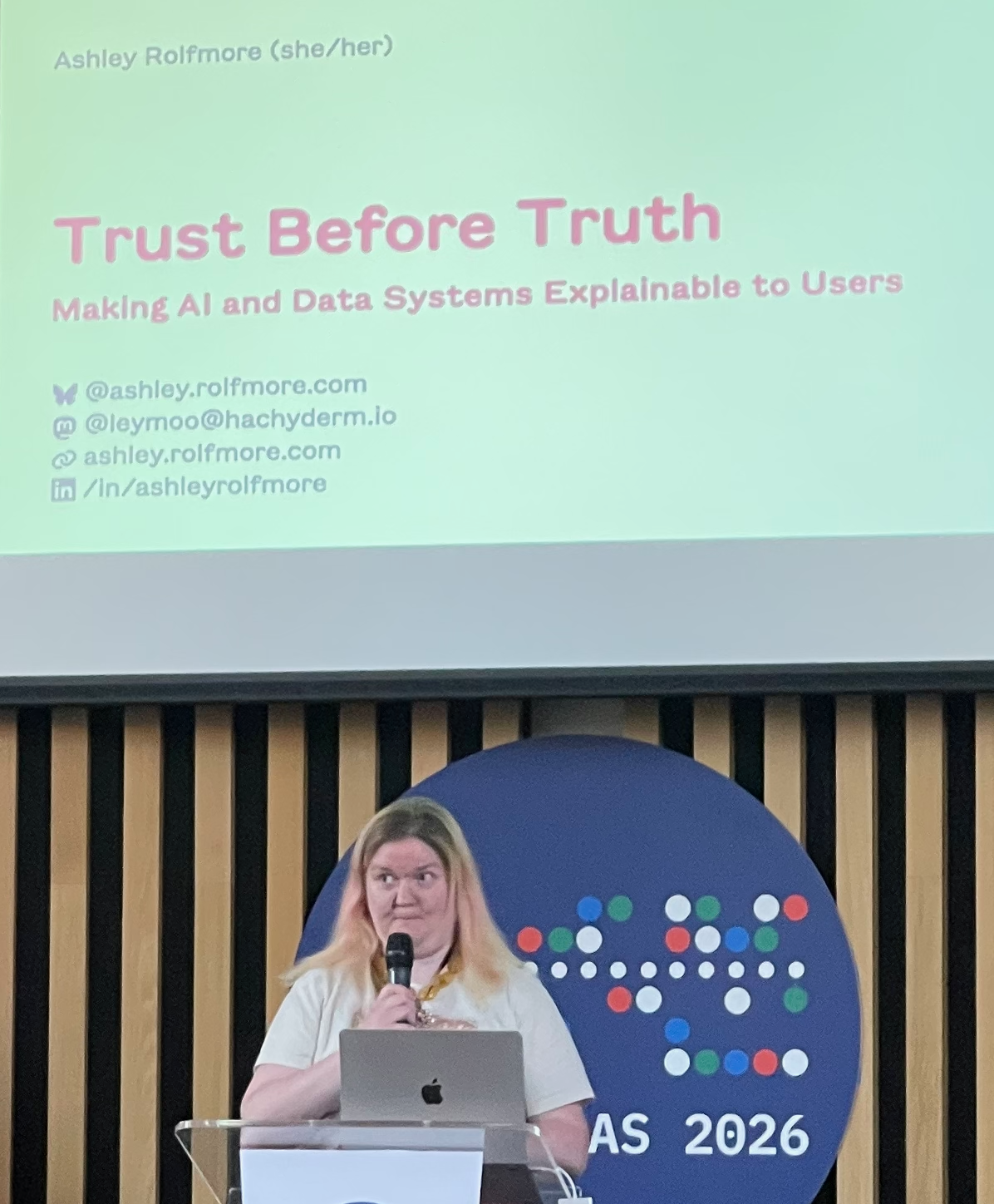
Ashley Rolfmore continued the AI theme of the morning with a talk entitled “Trust Before Truth”. She used a real world example of an assistance program in the UK and how the technology behind it touches real people and real lives. If there is a programming bug that causes my first person shooter game to glitch, it may be irritating but it isn’t going to cause someone to go hungry. As AI gets more and more involved in these systems, there is a need to build trust with the users of these systems.
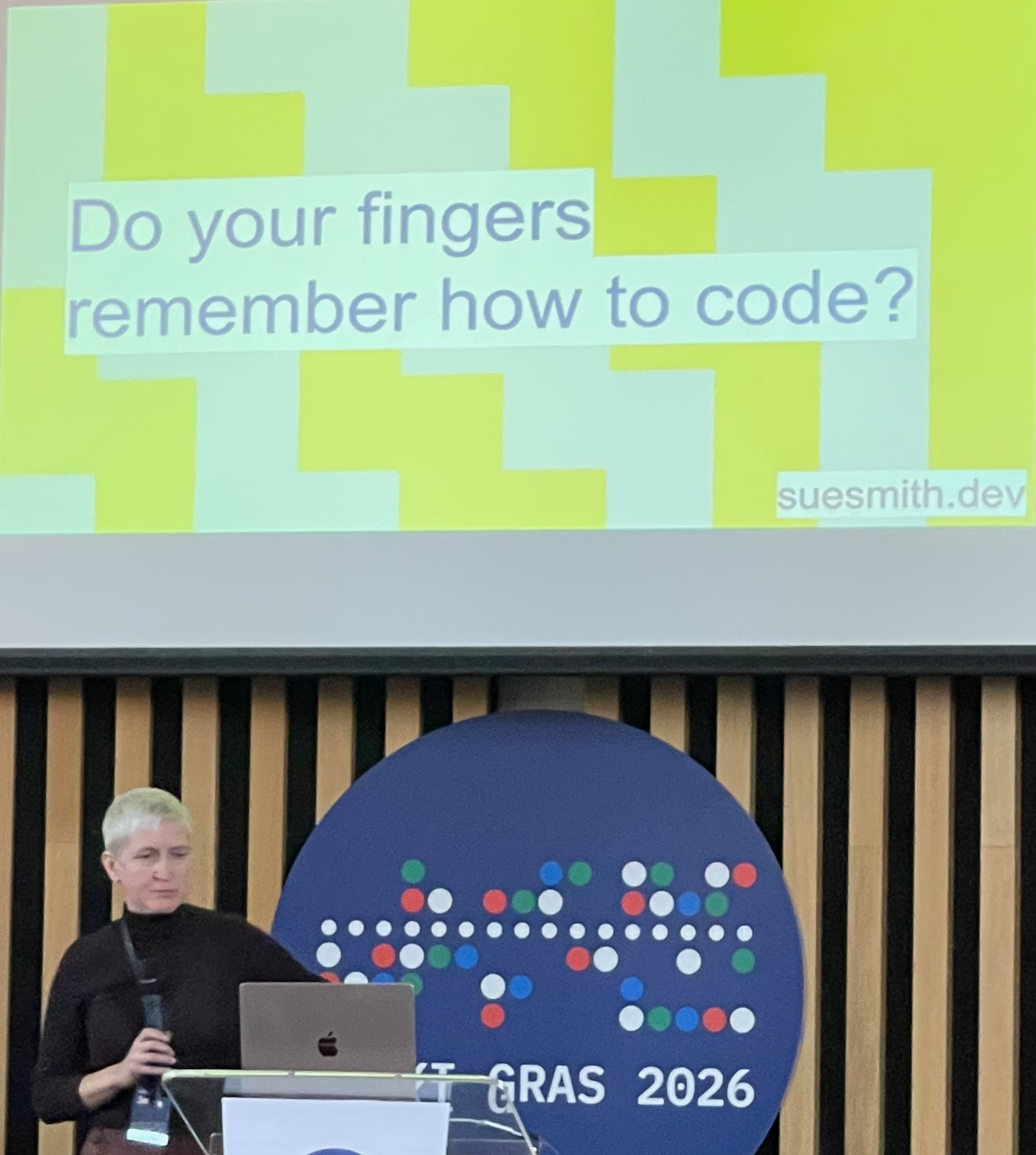
As this conference is about craft, Sue Smith’s talk on “Do Your Fingers Remember How to Code” focused on how AI will change how the developer’s craft. How does one remained “skilled” when that skill can be outsourced? There were no easy answers but there is value in asking the question.
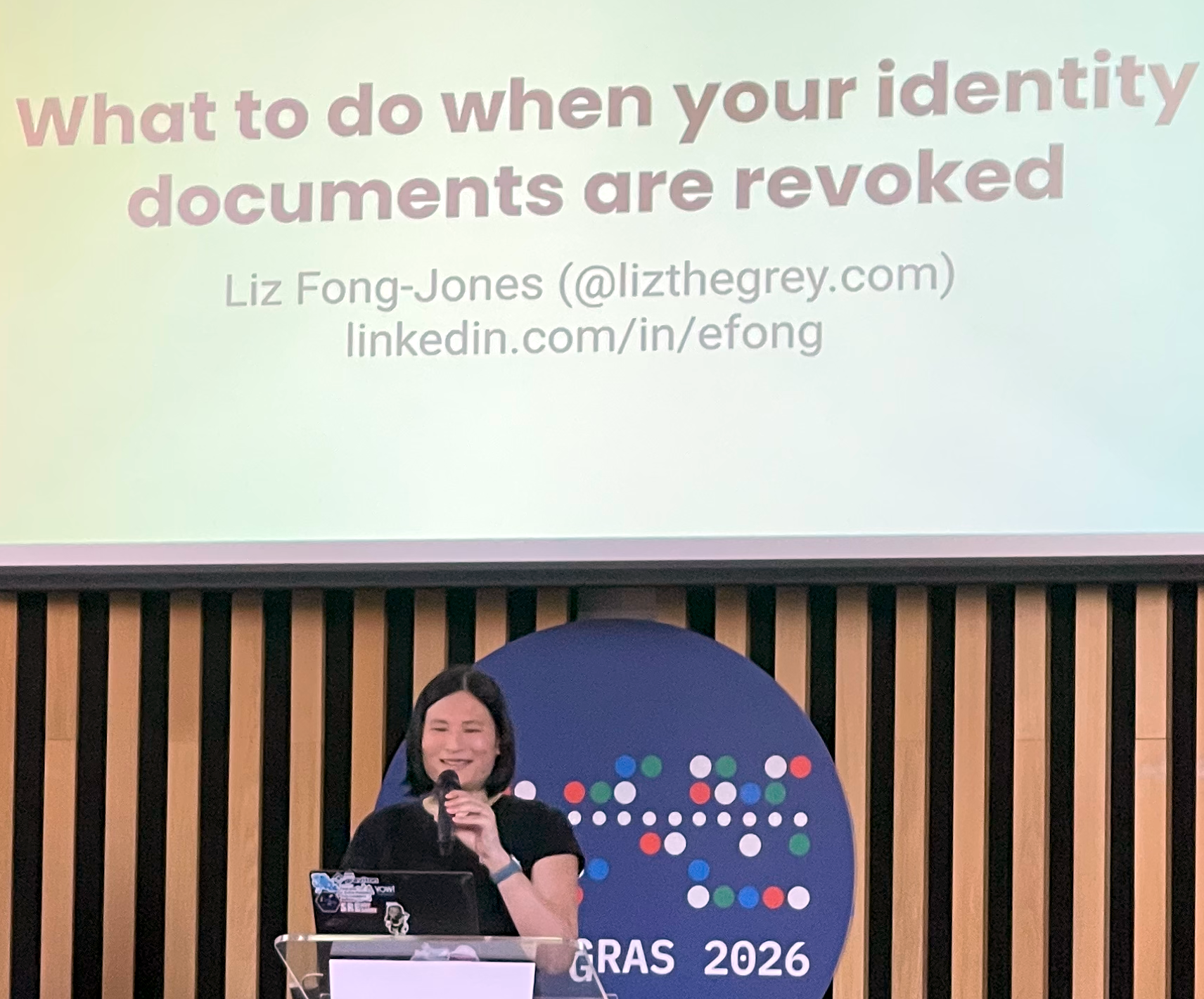
The final speaker before the lunch break was Liz Fong-Jones. I was introduced to Liz via Nithya Ruff back in 2024, but this was the first time I’d seen her speak. Her topic focused on being prepared when your legal identity can be stripped away. For people whose gender doesn’t match the one on their birth certificate or who are non-binary, new laws are making it difficult when it comes to official documents. This was another talk with no easy answers but the issues need to be raised.
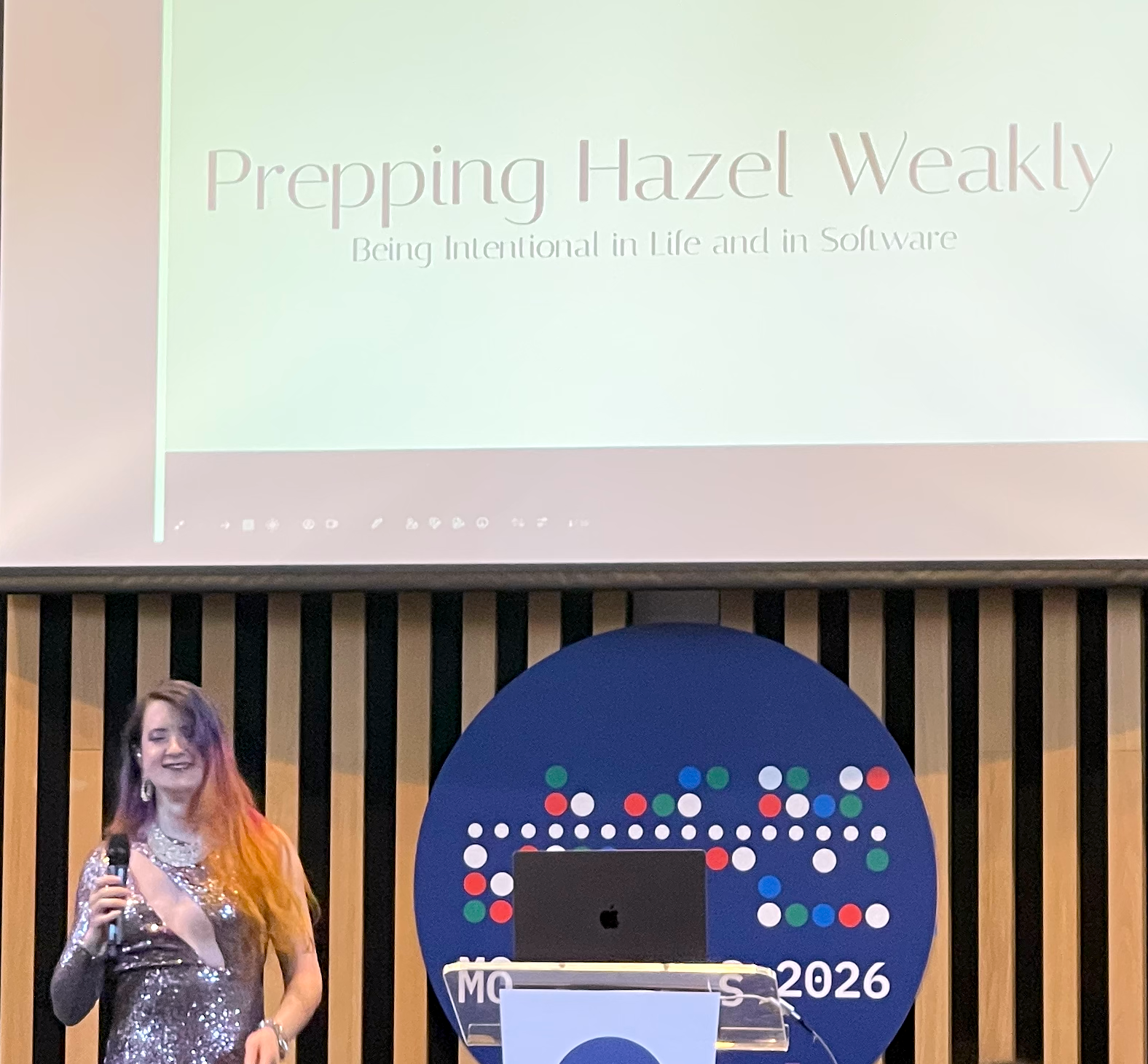
The first talk after lunch was given by Hazel Weakly. I’m not going to talk about it much since she shared things about her life in a very vulnerable way, and for the first time in public, but suffice it to say that her early life was like a crucible that melted everything down into component parts that allowed her to craft the person she has become. The lesson is that we all have the power to craft who we are.
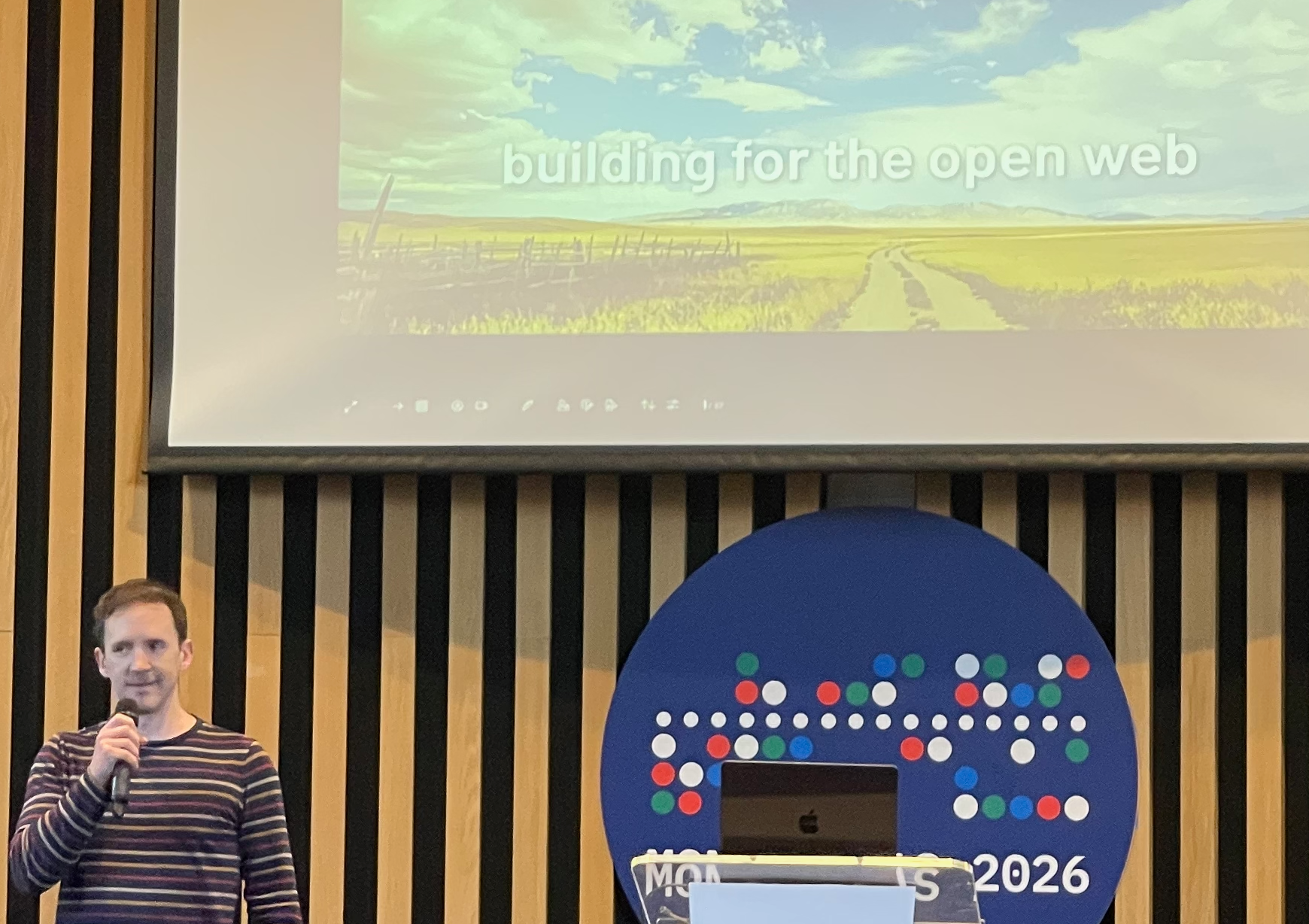
Daniel Roe swung the discussion back firmly into tech with a overview of the history and value of the AT Protocol. As a Mastodon user I am familiar with ActivityPub, which is a federated protocol mainly used for social networking, and I knew that the AT Protocol was being adopted by BlueSky. While I don’t claim to understand it fully, the AT protocol seems to operate at a lower level in the stack than ActivityPub, and it separates identity from data.
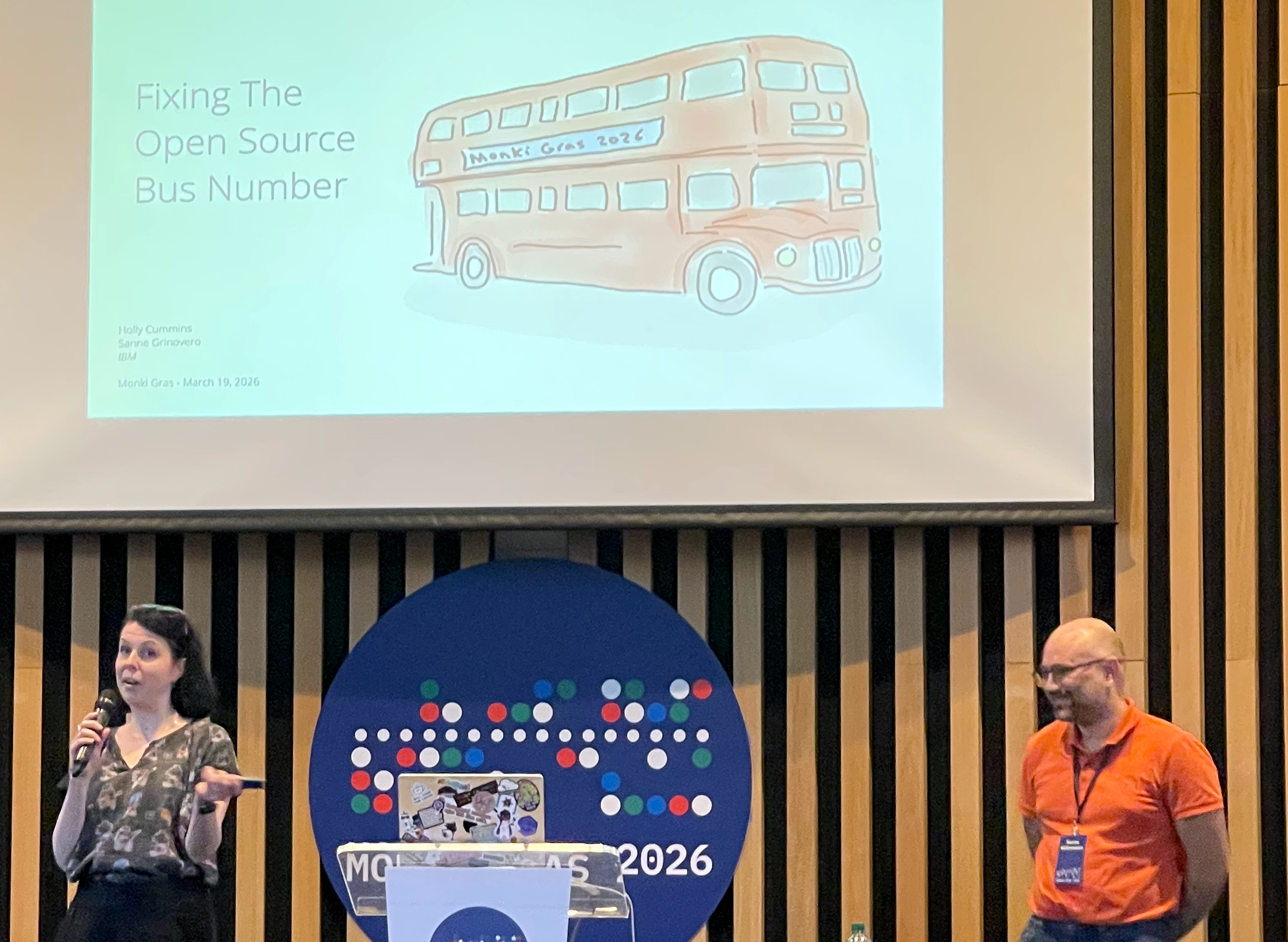
The talk “Fixing the Open Source Bus Number”, given by Holly Cummins and Sanne Grinovero, used a rather gruesome analogy to talk about open source project resilience. How many members of an open source project can be hit by a bus before the project ceases to exist? On my team at work we use the “pony factor” in a similar fashion to determine how many different people are contributing to the project. You start with the person who contributes the most code, by percentage, and then add the next person, etc., until you get to 50%. A pony factor of “1” means that one person is responsible for 50% or more of the code. We also have an “elephant” factor which does the same thing but for organizations. How many organizations does it take to hit 50% of the code contributions? Increasing this number is key for being prepared when tragedy strikes an open source project.
The final talk on Thursday was by Adrian Cockcroft, and this made me angry. Not because of the talk but I got a Slack message two minutes in that reminded me I had to be on a Zoom call. (sigh)
When Adrian was at AWS he created the organization that would eventually form the team I’m on, so I was very eager to hear his talk. Perhaps next time.
The evening event featured a meal, as well as beer and wine. One of the topics of the event was “small beer”, or beer with a low alcohol content meant to be consumed during the work day. When I was in Saxony several years back I got introduced to Radler, which was a low alcohol beer marketed to cyclists.
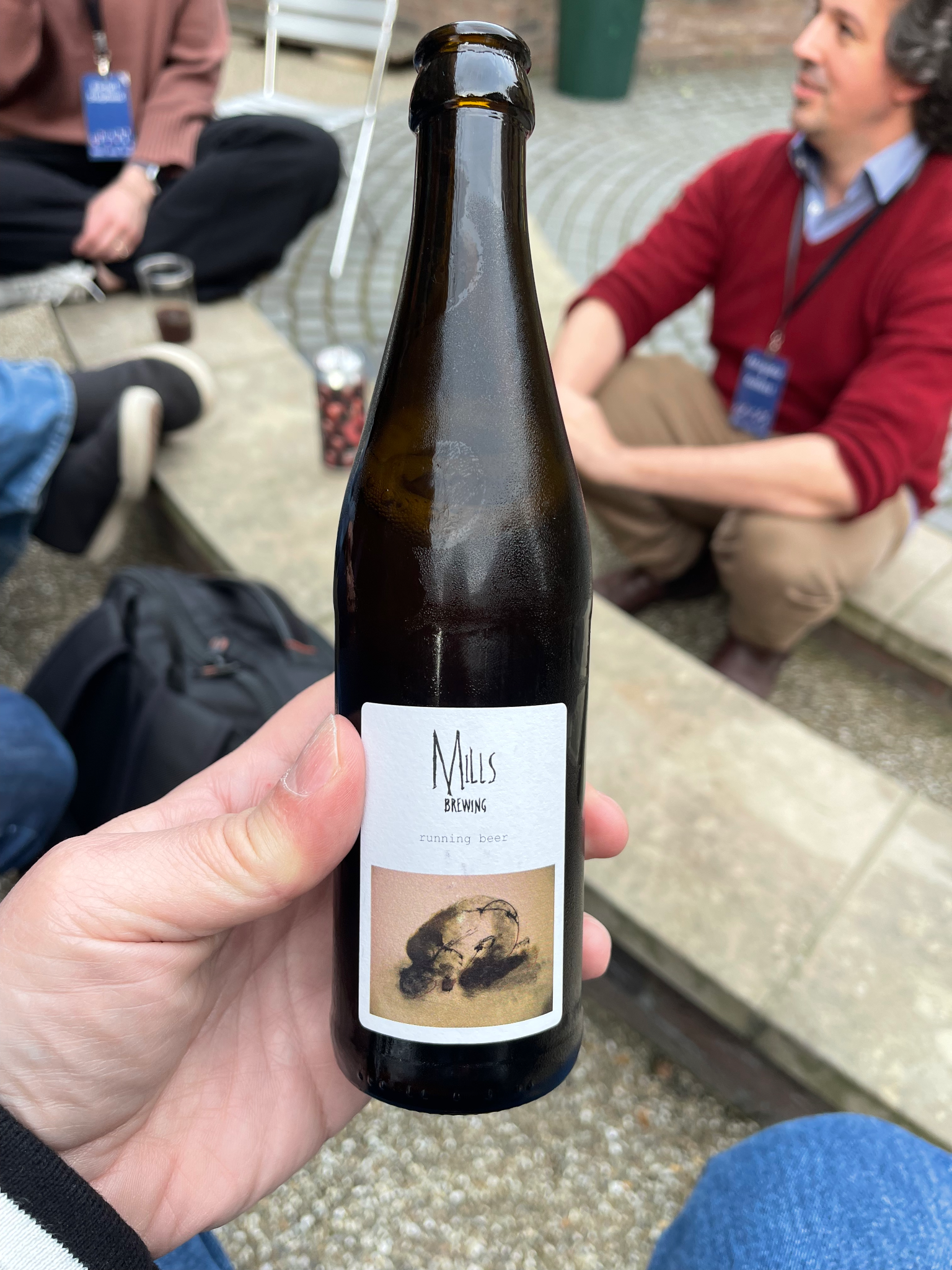
One of the “gets” was several cases of Mills. I think I got the last one. It was tasty.
The first talks on Friday brought us back toward the more generally accepted meaning of “prepper”. It was another beautiful day in London and it started off with yet another COVID test.
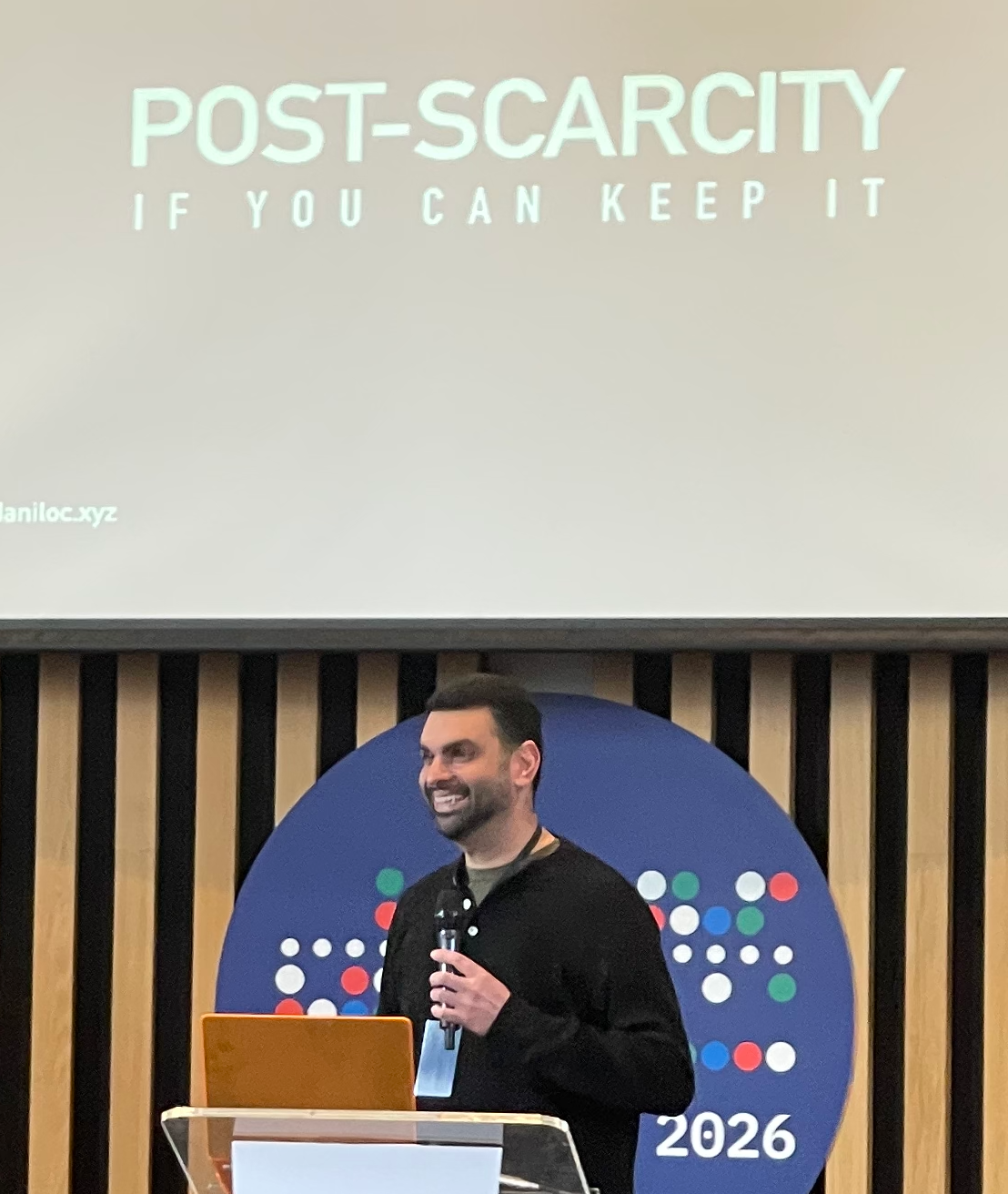
Danilo Campos talked about how we are at the cusp of “post-scarcity”. One example he used was the solar panels he installed at his house. Once they were installed you basically get free energy, which he can then use to charge his electric vehicle. While that may seem to usher in the idea of widespread abundance, other changes may not be so benign, and we, as individuals and a society, need to be prepared.
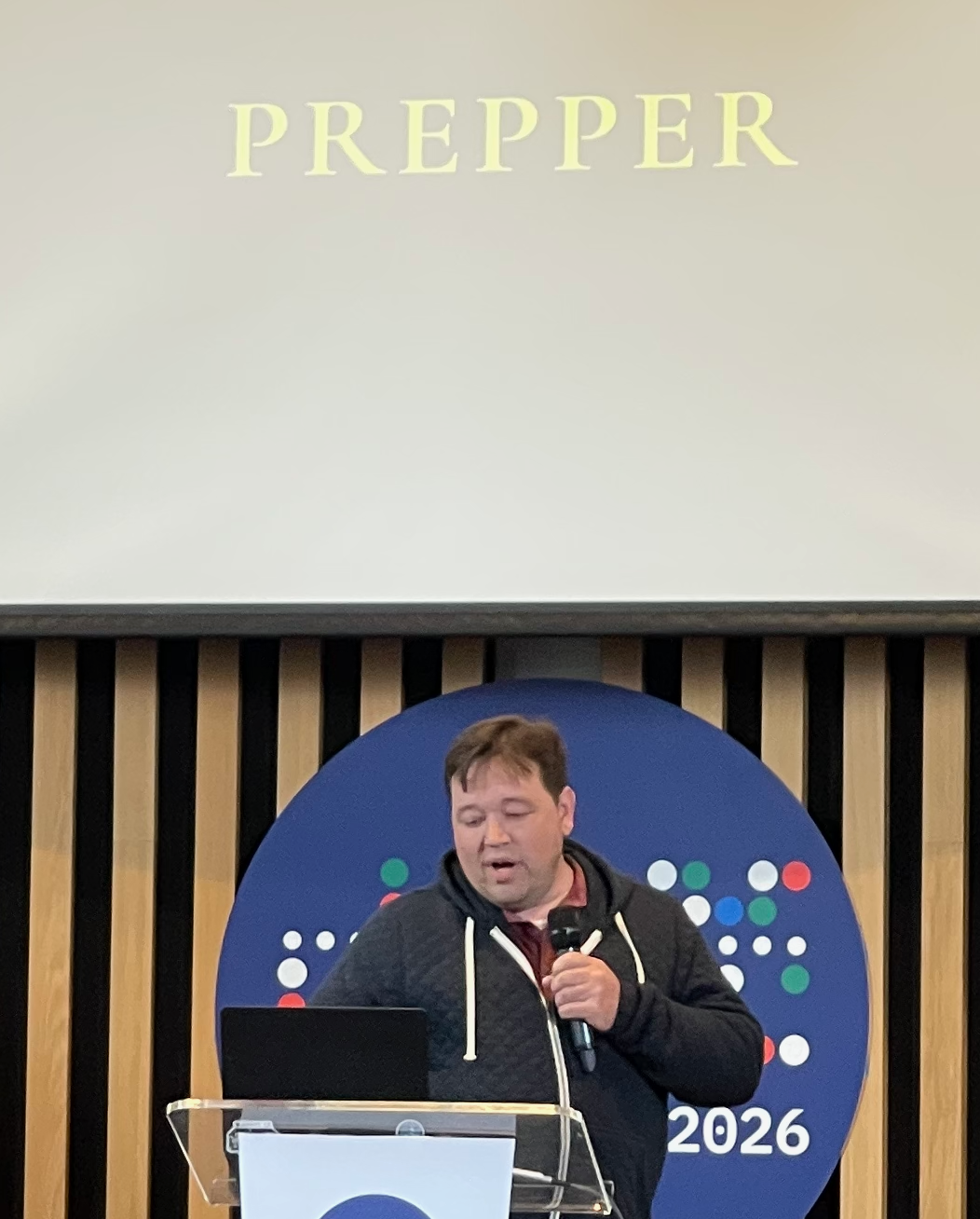
I really liked the next speaker’s presentation. Chad Metcalfe talked about being a real “prepper”, as in a person who tries to live as independently as possible. This was illustrated when he bought some acreage in the arid mountains of California, about 2.5 hours from his home near San Francisco. Things most of us take for granted: water, electricity, easy access to health care, etc. can be hard if you aren’t in or near an urban center. This resonated with me since I live on a large plot of land ten miles from the nearest gasoline station. It has some amazing benefits but also some drawbacks, such as what happens when you need to go to the hospital.
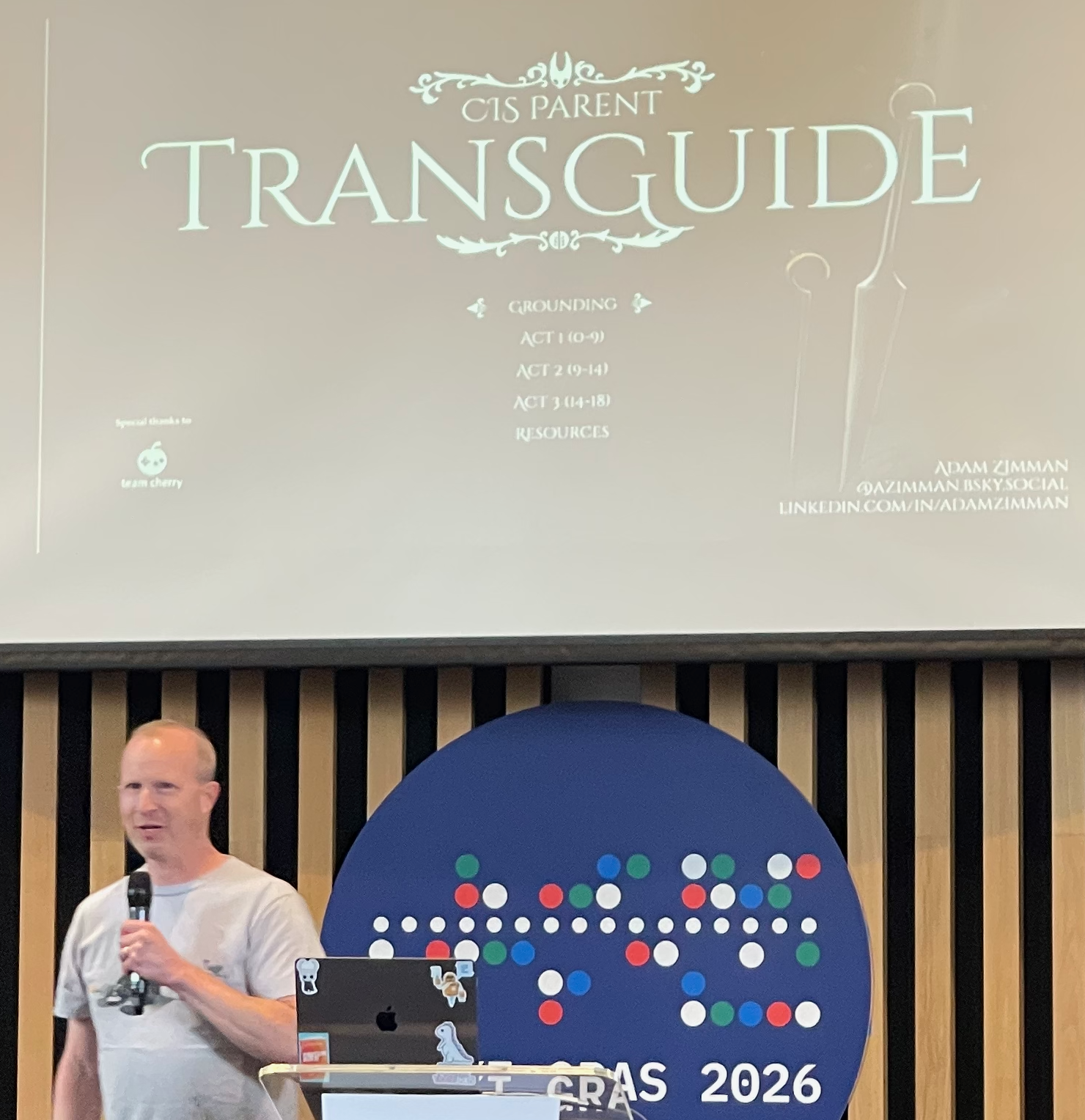
The final talk of the morning was given by Adam Zimman. Adam is the father of two trans children, and as a cis man he talked about the challenges and fears that come on top of all of the challenges and fears facing any parent. While I don’t have any children, I have two close friends with trans children and I have been able to follow their journey. I actually stayed an extra day in London to meet with one of them. I was around when his son and daughter were born and now I’m around to see his son and daughter as young adults, just with different given names. I wanted to ask Adam if he knew how common it was for two children in a particular family to be trans but never got the chance.
There were two final talks after lunch but I missed much of the first one. I ran into Chad and we got to talking about rural life. It was so much fun I lost track of time and when I walked in I was pretty glad I did because everyone was crying.
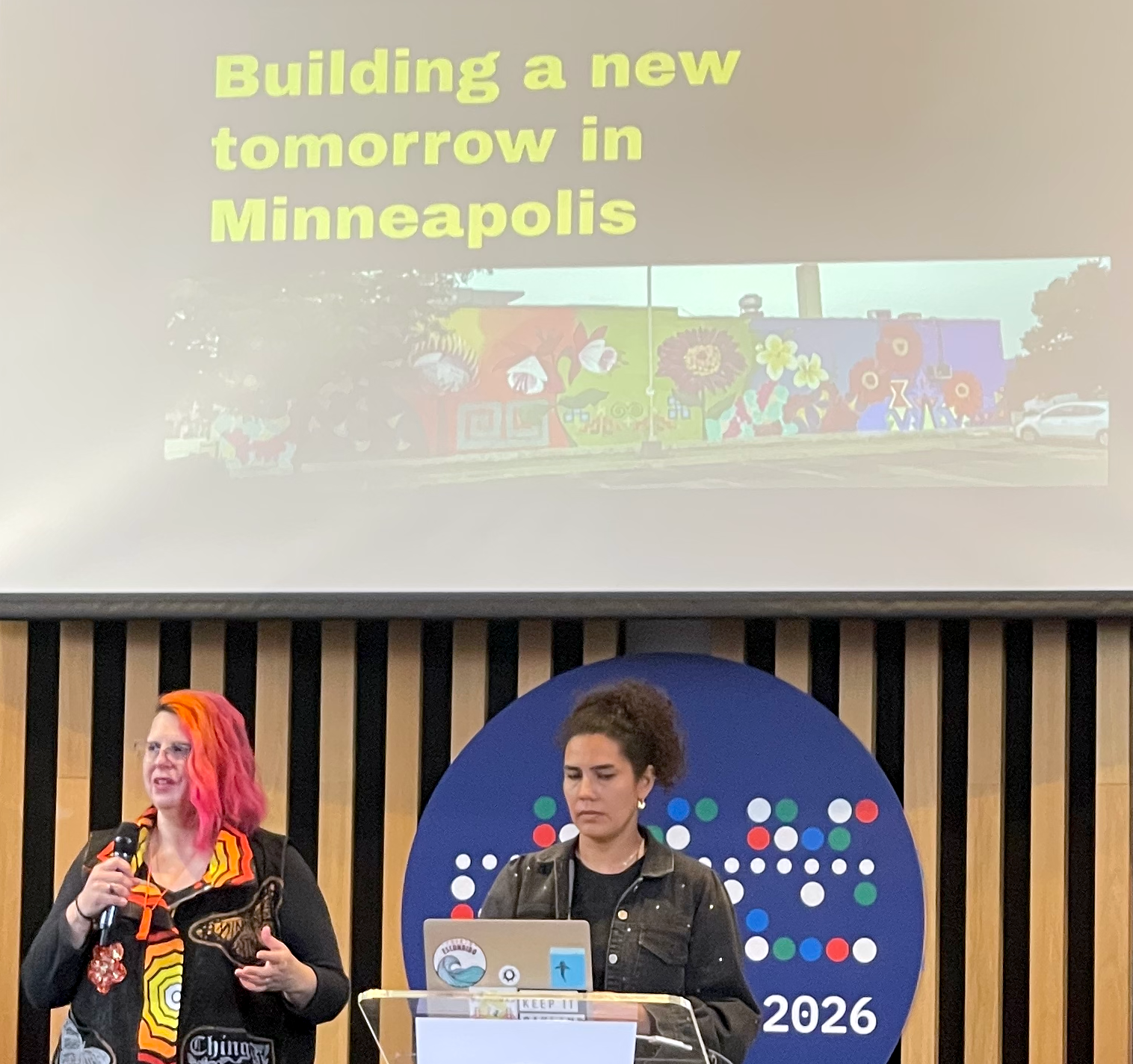
Heidi Waterhouse and Kim Harrison talked about being in Minneapolis during the ICE crackdown that saw at least two American citizens murdered by government employees. I have strong, positive feelings about Minneapolis since we used to host our annual developer’s conference there. In open source we talk a lot about community but the community that coalesced out of that nightmare was truly impressive.
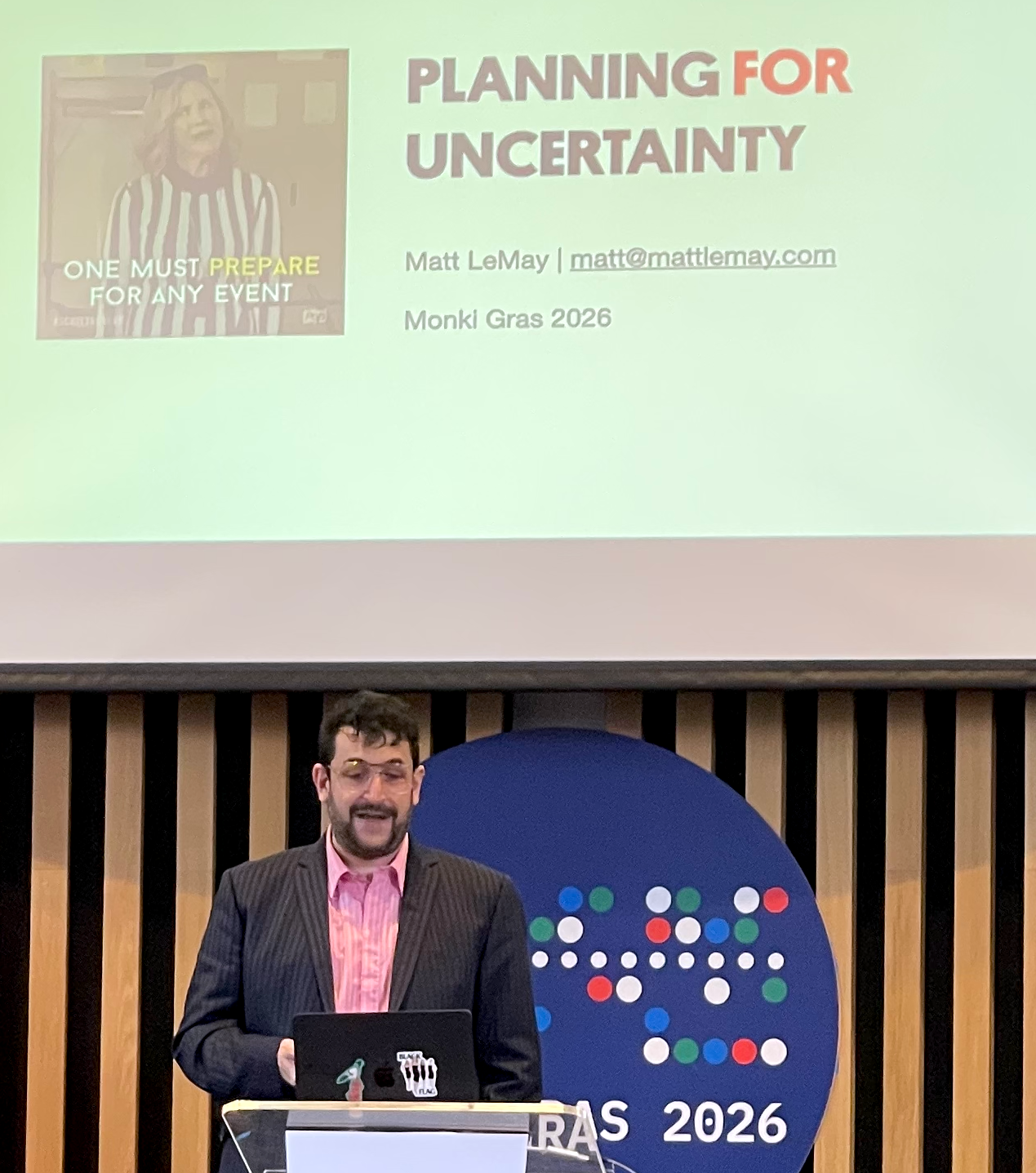
The final talk was by Matt LeMay on planning for uncertainty. When Matt took the stage I realized that I really need to up my presentation game. He had us eating out of the palm of his hand.
I hope these very short (and probably inaccurate) summaries of the talks have piqued your interest in Monki Gras, but the star of the conference was the hallway track. So many amazing people and so many amazing discussions.
One worry I have about the open source community is that we are aging. In part it is that open source is a fairly new concept (well, at least when compared to things like the internal combustion engine) and thus the people who started it are still around, just older. But there were some younger people there, including Hawwah Okunmoyinbo, who asked my friend Ricardo Sueiras and me for some career advice. It was nice to see such energy coming from the younger generation.
I also got to meet Sean O’Dell and Maddie Wambach. They work for Dynatrace which was a sponsor (along with my employer AWS) of the conference. Dynatrace is a leader in observability solutions and one I’ve admired since I got to work with their products, briefly, in 2022. They are embracing open source in a big way, and recently had one of their team appointed to the community manager role at OpenTelemetry.
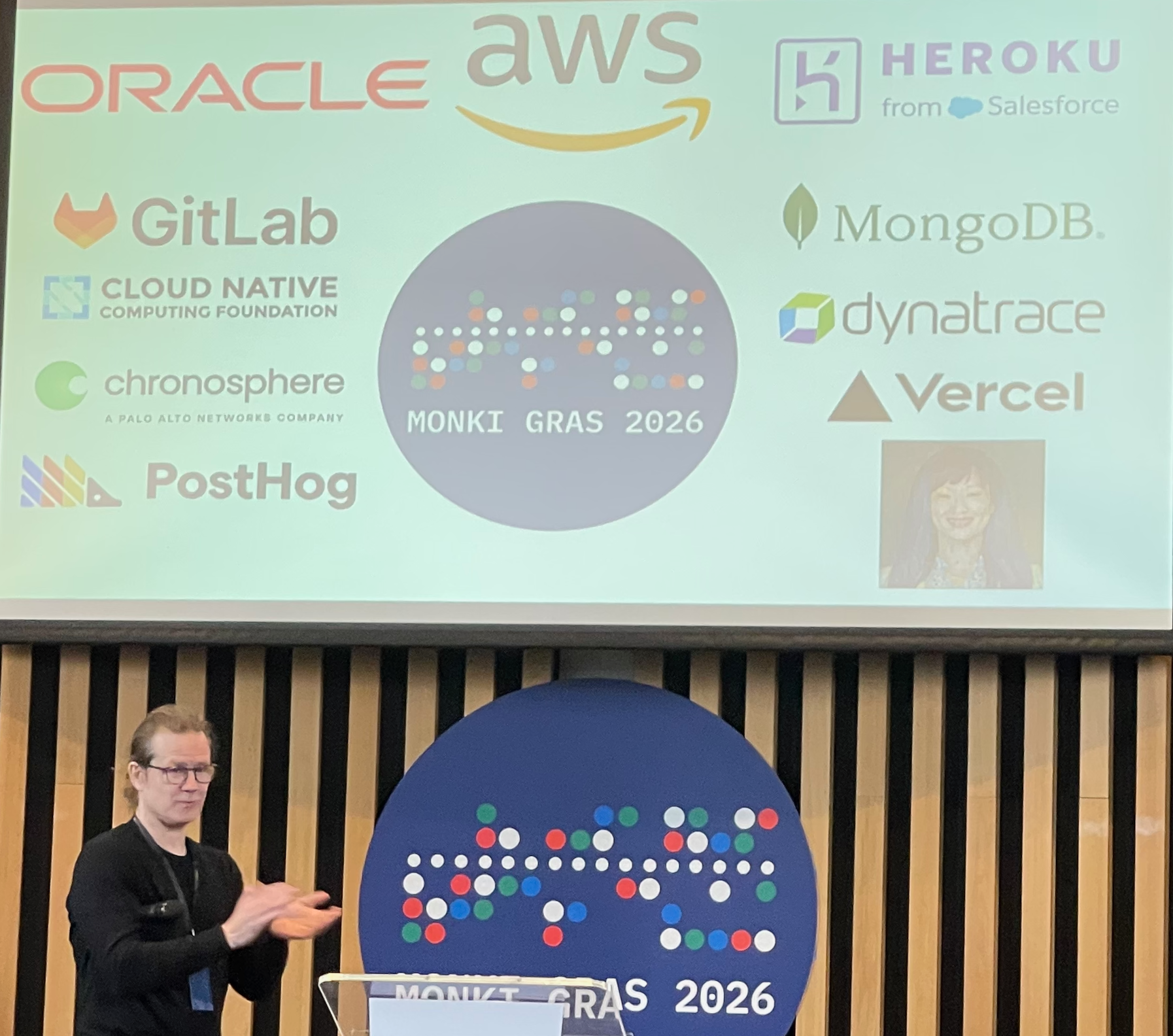
AWS was well represented, too. In addition to Laura and Ricardo, I got to spend time with Farrah Campbell (always a delight), Madelyn Olson (Ms. Valkey) and Julian Wood. Julian and I especially hit it off. Even though we are both in DevRel at AWS we don’t get to interact much and so it was fun to be able to spend some time with him in person.
Although Stephen couldn’t join us (some sort of stupid work thing) I did get to see the amazing Rachel Stephens and Kate Holterhoff from Redmonk as well.
I will probably get in trouble for this, but between Monktoberfest and Monki Gras I have to give the slight edge to Monki Gras. The main factor was the weather. London in good weather is a treat and while Portland in autumn has the leaves, it can also get a bit cold.
In either case I can’t recommend these conferences enough, and I hope to see you at the next one.